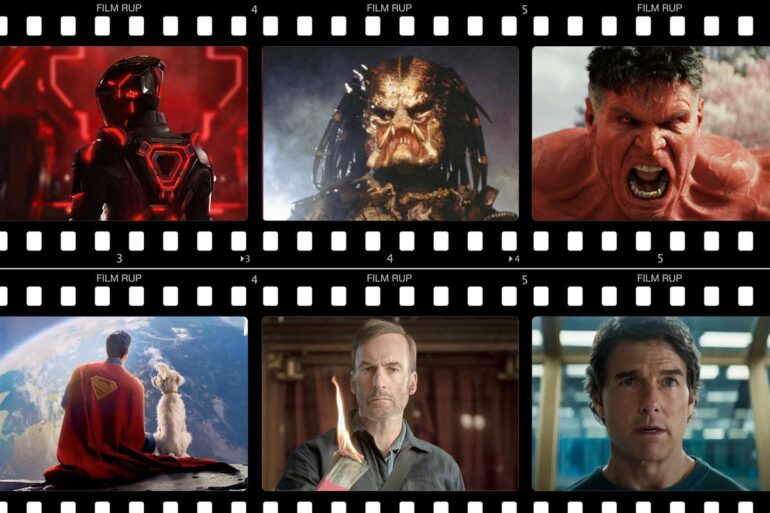

“The Accountant 2,” “Thunderbolts*,” “Final Destination: Bloodlines,” “Mission: Impossible – The Final Reckoning,” “Lilo & Stitch,” “Karate Kid: Legends,” “Ballerina,” “How to Train Your Dragon,” “Becoming the Night: A Nightwing Story,” “28 Years Later”…
Exhausted yet?
“M3Gan 2.0,” “Jurassic World: Rebirth,” “Superman,” “I Know What You Did Last Summer,” “Smurfs,” “Fantastic Four: First Steps,” “The Bad Guys 2,” “Freakier Friday” and “Nobody 2.”
19. That is how many sequels, remakes and spin-offs are coming out in the summer of 2025, not even counting at least nine others expected to follow later in the year. It is crazy to think how, not that long ago, any of these films might have seemed like a novelty. Back when a new Marvel or DC movie was a big deal. Or when a cult classic like “28 Days Later” getting a sequel actually got fans excited. Now, rather than expecting anything exciting from their summer blockbusters, audiences seemed resigned to, at the very least, see something that they recognize. Which begs the question:
Why are we so stuck on retelling the same stories?
In reflecting on that question, there are two answers that seem to play into the ‘Brand-Name Movies’ phenomenon. Even I have to admit, one is a lot easier to swallow than the other.
When I was younger, I used to think that movie studios were like artists. They wanted to make something beautiful. They wanted to make a difference. A statement. As I grew to know more about the industry, however, my perspective of filmmaking began to shift. Without a doubt, Hollywood is full of artists, of people who care about their craft and want to make their mark, but filmmaking is not merely an art, it is a business. Executives want to make money, and — as the numbers have shown — one of the most sure-fire ways to do that at the moment seems to be through name recognition. By making recognizable movies, studios are able to ensure a return on their investments. On their part, sticking to what they know will make money is just good business, which leads to a far more uncomfortable reality.
It is the audience’s fault that fewer original movies are being made.
Not long ago, I found myself ranting to a friend about the newest trailer for this summer’s “How to Train Your Dragon” remake. For a solid 15 minutes, I growled over how many of the shots in the trailer were shot-for-shot recreations, how the actors barely said any original lines, and how disappointed I was in Dreamworks for falling to Disney’s level. When I finally stopped to take a breath, my friend asked if I was planning to see it in theaters. My response: I still hadn’t decided.
I’ve thought a lot about that answer since then. As a super fan of the original movie, I disagree with every choice that I have seen from the movie so far. I don’t support any of the studio’s decisions regarding it, and I can almost guarantee that I would leave the theater angry. But, for some reason, I am still considering going to see it.
This is why original films are struggling so much to be made.
Studios don’t care if their films say anything. I’ve known that for a while now. But only recently did I realize that they don’t even care if their films are liked. All that they need is for them to be seen. For tickets to be bought. For numbers to be profitable. In that way, though I hate to say it, maybe these half-baked reboots are the perfect option for them. Those who don’t care will watch it for the name, and those who do care will watch it just to rage. Still, everyone will watch it. So they’ll make another. And another. And another.

But what if we just don’t watch it?
Every dollar we spend casts a vote. About what flavors get made. What brands are discontinued. What types of labor conditions are allowable. When we buy, we are making a promise to buy again. We are condoning and uplifting. We are marking something as worthy, whether or not it carries any actual worth. In a world where the arts have gone capitalist, the audience has taken the reins of the artist. Through some bizarre twist of fate, we are the ones in control.
So it’s about time we act like it.
Article written by Sabina Boyer.
Photo courtesy of Ultimate Classic Rock.