
In my 21 years of living, there have been very few times when I’ve felt as aimless as I did when I stepped onto campus for the first time as an undeclared student. That insecurity only grew worse throughout Welcome Weekend, as I continually braced myself for new introductions. I hated the typical “what’s your name?” and “which dorm are you in?” because it always led to the dreaded “what’s your major?” question. It seemed like almost everyone I talked to had already figured it out. Worse yet was the fact that when I told people I was undeclared, they usually followed up by asking which majors I was considering. While it was a fair question, I had zero answers. I felt isolated from the people who quickly made connections through their majors, paths selected from passions like horses or film.
My curiosity about the experiences of other undeclared students recently led me to a discussion with Michelle Kratzer. As the Director of Career & Calling at Asbury, she works as an advisor for people with undeclared majors. As I quickly learned from our conversation, I was far from alone in my experiences.
“A lot of students don’t like to admit that they’re undeclared majors,” Kratzer shared. “In a classroom full of people, I won’t ask who’s undeclared because I’ve picked up that students are hesitant.”
It’s interesting that so many undeclared students feel this hesitancy when they are actually one of the largest groups of majors at Asbury. The Asbury University Profile currently lists the undeclared major in its “top 10 traditional undergraduate majors for fall 2024.” As the seventh largest major, it represented 4.29% of all students last year. My perception of my position as some sort of rare incident was in direct opposition to reality.
In addition to there being a large number of undeclared students, there are a variety of reasons as to why students begin college on that path. Some students may feel drawn to too many options, while others might not yet be sure what they feel passionate about. Factors such as family support or a desire to better understand career options can also play a role. Each student has unique reasons for choosing this path, and none of those reasons are shameful. Starting college undeclared has its own benefits.
One of the benefits of studying at a liberal arts college is the opportunity to take classes in a variety of subjects. It is always helpful to expand our breadth of knowledge, regardless of whether we’ve determined our college path or not. For students who haven’t yet chosen the major they’ll graduate with, however, the general education requirements can provide an extra blessing. There are currently 56 credits worth of foundation requirements at Asbury, with subjects ranging from math to theology to art. This can provide students with room to explore potential interests without having to commit to any specific path.
While undeclared students may feel pressure to select a major as quickly as possible, I think there’s a lot to be said for taking time to sit with our uncertainty. We all experience times in life where we don’t know which path forward is right for us. The major is called undeclared instead of undecided for exactly this reason. Having a degree plan doesn’t mean that students aren’t undecided in terms of career plans or other areas of their lives. Learning how to navigate uncertainty through the process of choosing a major can be an invaluable experience.
Starting out as an undeclared student ended up being a wonderful way for me to begin my journey at Asbury. My complete lack of certainty allowed me to be open to any and all possibilities. Without that, I don’t know if I would’ve even considered the major that I ended up choosing. Taking the time to think through my options, even when I felt pressure, led me to pick something that I’m really happy with.

“This is a great major,” Kratzer said. “It’s a great major to have; it’s a great place to start… to come in this open and curious and then to plug yourself into a system.”
Career centers like Career & Calling have processes that help students, whether they’re undeclared in terms of their major or undecided in another aspect of their education or their career. Those processes ultimately require students to put in the work of figuring out their own paths, but they offer support and guidance along the way.
Support is something that we all need as students. While some undeclared students may feel hesitant to talk about it, there is value in being vulnerable about our uncertainties. The process of picking a major or career path does not have to be done alone, nor does it have to be a source of great pressure and stress. It’s okay to not know yet, and it’s more common than you think.
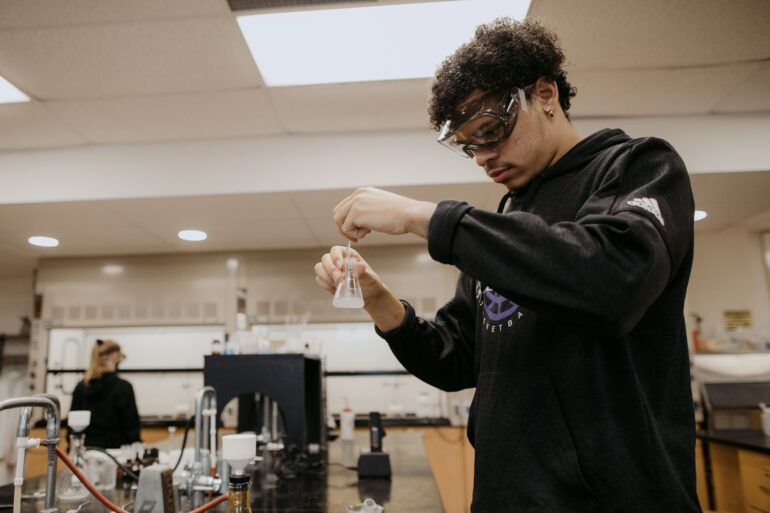
Photo courtesy of Asbury Strat Comm.