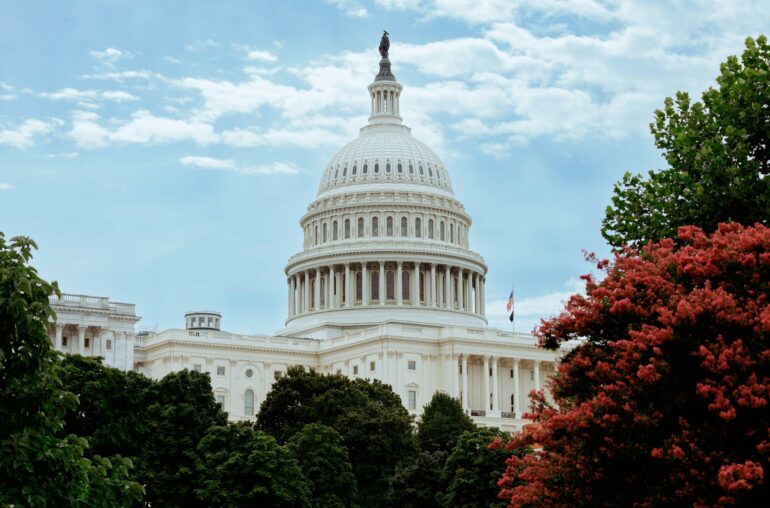

As the federal shutdown continues, with Congress failing to pass funding legislation, the impacts are being felt far beyond Washington, D.C., including right here in Kentucky. For families, local governments and the state economies, the federal shutdown brings disruptions and uncertainty throughout the commonwealth.
A government shutdown takes place when Congress fails to pass the annual funding bills, which keep many federal programs operating. Although all employees who staff non-essential programs are furloughed, there are many programs that are not affected by the shutdown because they are considered essential. Programs like Medicare and Medicaid, Social Security, U.S. Postal Service, veteran benefits, military operations and Immigration and Customs Enforcement and Customs and Border Protection remain operational during the government shutdown.
Other programs like the Smithsonian museums and the National Zoo are temporarily closed.
Federal employees who are furloughed during the shutdown will receive retroactive pay once the shutdown is over. While military operations will continue as normal, those working will not receive pay until the end of the shutdown. The state of Kentucky currently employs nearly 25,000 federal workers and while they will receive retroactive pay at the end of the shutdown, workers and their families may face devastating effects from weeks without paychecks to afford their expenses.
Although people nationwide are now left wondering whether or not certain government operations are taking place, there is no centralized government resource that outlines which programs will remain open or closed, meaning that in order to find out what services are or are not operational, you must visit each government agency’s individual website to find that information.
Among the programs affected, the Supplemental Nutrition Assistance Program (SNAP) and the Special Supplemental Nutrition Program for Women, Infants and Children (WIC) are most at risk. Together, these programs are utilized by over 700,000 Kentuckians.
Some states have already halted new enrollments for SNAP benefits, while other states have already warned their residents that they may not receive their food assistance payments for November. Ronald Ward, the program’s acting associate administrator, wrote on Oct. 10, “Considering the operational issues and constraints that exist in automated systems, and in the interest of preserving maximum flexibility, we are forced to direct States to hold their November issuance files and delay transmission to State EBT vendors until further notice. This includes on-going SNAP benefits and daily files.”
Although the USDA has warned that there will be no funding for SNAP in the month of November, Governor Beshear said in an update on Oct. 20, that Kentucky SNAP recipients will continue receiving benefits as normal.
A large percentage of the food that can be found in Kentucky food pantries also come from USDA, the federal agency that oversees SNAP. This includes at God’s Pantry Food Bank, where many are concerned that layoffs of thousands of workers in Kentucky could lead to higher food insecurity. Although an increasing amount of Kentuckians may be in need of essential resources from food banks, food banks may not have access to needed federal resources to serve a growing population in need.
Additionally, local health departments, many of which are already severely underresourced, such as the Lexington-Fayette County Health Department (LFCHD), rely on the federal government for grants to carry out some of their operations.

Higher education institutions in Kentucky are also being affected by the shutdown. Many universities, including the University of Kentucky, receive federal grants to fund research projects, student aid and campus operations. With the federal government unable to process grant payments or approve new funding, ongoing research could face delays and uncertainty. Professors and graduate students who rely on federal research stipends or grants may be forced to pause projects until funding resumes.
Financial aid programs such as Pell Grants and federal student loans are not expected to be immediately disrupted, as they are mandatory spending programs, but a prolonged shutdown could delay processing times and create complications for students seeking assistance later in the semester.
Although many services remain operational, the federal shutdown continues to impact citizens all across the commonwealth. Kentuckians are left waiting for answers regarding services that impact their daily lives and face the emotional toll of uncertainty spreading across the U.S.
While the future of the U.S. economy depends on decisions made in Washington D.C., the consequences of the shutdown are being felt far closer to home.
Photo courtesy of Unsplash.