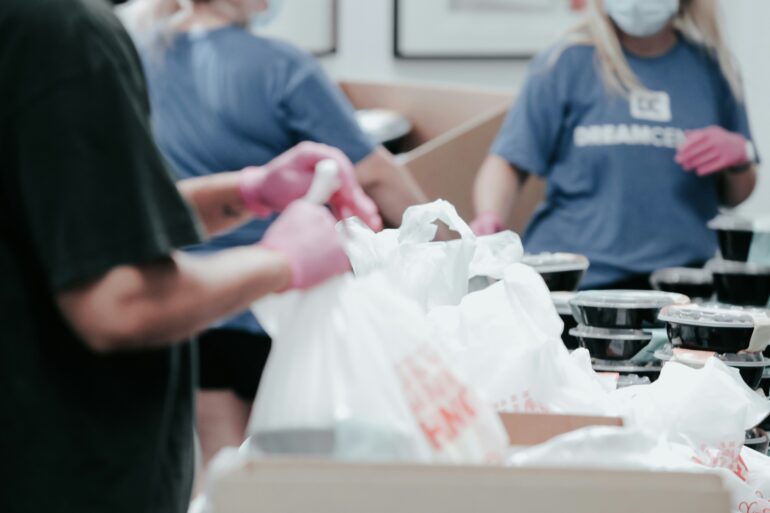

A lot of people feel the urge to do volunteer work in order to address political and social issues that concern us. As part of my requirements as an Honors student, I need to complete a certain number of volunteer hours before graduation, so I have spent time exploring volunteer work near campus. There are plenty of opportunities in and around Wilmore to get involved with volunteer work, and many of us are engaging with them during our time as Asbury students. Sometimes, however, our well-intentioned efforts can come with an unhealthy mindset.
The desire to volunteer often comes from wanting to help make the world a better place, which is a great place to come from. Where this desire to help can become less noble is when our view of the people impacted by our volunteer work becomes one-dimensional. It is common for well-meaning volunteers to slip into a mindset that categorically divides the volunteer from the people with whom they work. They become the “hero,” and the recipient becomes “the person who passively receives that aid.” The issue is that we can begin to see the recipients of aid through that narrow light, reducing the complexity of their humanity and unique situations into superficial stereotypes. In conjunction with that, we can develop a sort of savior complex.
This has multiple consequences. On an individual level, a savior complex can lead to insensitive interactions and an overinflated sense of ego. On a larger level, it can lead to power imbalances within the structure of a volunteer-based organization in which the people “giving” the aid speak over and ignore the words of the people within the community.
I do not know if any of us can truly claim that we have never let a savior/hero mindset guide our actions, nor do I have all the solutions to the problem. I do, however, have some thoughts. While working on this article, I asked Geneva Wise, a senior at Asbury, for any advice that she would give to people who want to handle volunteer work with sensitivity and empathy. Wise regularly volunteers with Kentucky Food Ministry and helps new volunteers get acclimated with the work. According to its website, the organization provides “emergency food assistance to those experiencing homelessness and food insecurity in downtown Lexington.” Many of its volunteers are Asbury students and alumni.
Much of Wise’s advice had to do with having respect for the humanity of the people we work with. “Abandon the ‘this helped me more than it helped them’ attitude that Christians often take on when returning from volunteer or mission work,” she shared. “It changes the way you look at, speak to, and interact with human beings. If you are concerned about coming across as insensitive, much of the work is already done. Treat people with respect and don’t treat them like they are the embodiment of their worst experiences.”
It is important to look for volunteer groups that emphasize these values of respect and dignity, as well as the influence of people within the communities where the volunteer work takes place. Who is leading these organizations? What do their mission statements look like? What are other people saying about them? I think it is also important to engage with the issues that we want to change on a larger level. Individual aid is essential, but lasting change often comes about through the transformation of harmful societal and political structures. It is vital to support people who are facing issues such as food insecurity, and it is also vital to work towards changing the structures and aspects of our culture that lead to food insecurity in the first place.
Something else that I have been learning more about this year is mutual aid networks. These emphasize aid that is given horizontally, focusing on shared responsibility in which all community members help out as they can. This differs from the structure of volunteering and charity, where aid is given from the top down. It is sometimes more direct than charity as well— helping a neighbor to pay for groceries versus giving money to an institution to handle.
Regardless of the methods through which we show love to our neighbors, I think that the mindset of mutually caring for one another is a helpful one. We all face situations where we are the ones needing support in an area of our lives. There is no person who should only help or who should only be helped; no one’s lives are as simple as that.
Photo courtesy of Unsplash.