

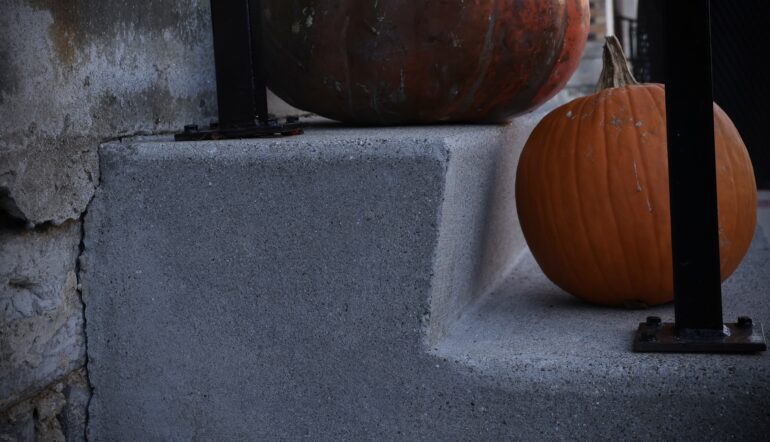

Trunk or Treat events. Harvest festivals. Reformation Day celebrations. Sure, they may be on October 31, but trust us – they are not Halloween parties. Just… wholesome Christian dress-up events featuring pumpkins and candy!
Growing up, I experienced the full range of how people celebrate the last day of October. I begged for candy out of the trunks of church-going parents. I watched the 1953 black-and-white “Martin Luther” film with commentary and candy corn. And, yes, I even took part in a pagan Halloween party at a secular school. Now, as I look back on these experiences as a whole, I can’t help but wonder: why does it matter so much what the October 31 celebration is called, and, maybe more importantly, are we making the right choice in how we celebrate it?
To answer those questions, we have to start by looking back. 2,000 years back, to be precise, to the ancient festival of Samhain (saa·wn) in Celtic Ireland. To the Celts, October 31 marked the end of summer and the beginning of a long, deadly winter, with a night where, according to their beliefs, the boundaries between the living and dead worlds were blurred, making it easier for spirits to cross over and cause trouble both to people and crops. As a result, the Celts built massive bonfires on which to sacrifice to their deities and wore costumes and masks to hide from the evil entering their world.
Cons: evil spirits and pagan sacrifices. Pros: costumes and campfires!
It did not take too long, however, for Christians to try and replace this tradition. In the eighth century, the Catholic holiday All Saints’ Day was moved to November 1, marking the night of October 31 as All Hallows’ Eve, a term that would eventually lead to the name Halloween. Though this day mainly stressed fasting and prayer, later traditions in England and Ireland included giving out small, round soul cakes to children and the poor who would go from door to door singing for them and promising to pray for deceased loved ones in return. By the Middle Ages, however, the traditions of this new holiday had begun to blur with those of the original pagan one, creating the foundations of what modern Americans might expect on the last day of October.
So where does that leave Christians now? For many religious Americans, the answer comes with picking and choosing which of history’s traditions slide in most neatly with their faith, stressing the yummy goodies and the fun costumes while sweeping the world of the dead under the rug. On the surface, this seems like a fine solution. It allows for fun childhood memories without having to touch the occult, and though it is amusing that the word “Halloween” is the first thing to go, considering its Catholic origins, this choice from many Christian parents is certainly understandable. But, what if, in stripping the history and the origins of the thing we want to celebrate, we are missing something important? Something that both the Celts and the Medieval Catholics refused to shy away from?
Something like the spiritual?

As a Christian, I believe that spiritual forces are still at work. I don’t know in what ways or what capacity, I don’t know if those are questions we can fully answer in this life, but I believe in demons. In angels. In life after death. In our Western Christian culture, we are fine talking about the afterlife as long as it’s heaven. We are fine acknowledging angels as long as they’re docile and porcelain. When we share the gospel, we stress how much more important someone’s soul is than their body. And yet, during the one day a year that our culture actively engages with the idea of supernatural forces, we pretend they don’t exist.
What if we talked about it? Not in the same way as the rest of the world, we aren’t called to be part of the rest of the world, but we are still here for a reason. To engage. To wrestle. To be a light in dark places. But in order to be that light, we have to be willing to look into the darkness, to admit that the darkness is real and to show by the way we engage with it that we are something greater than the darkness. It’s what makes us who we are meant to be. And, hopefully, it’s what shows people that there is more to our faith than trunks full of candy.
Photo courtesy of Alanna May.
