


The opinions represented are the writer’s alone and do not necessarily represent those of the Collegian staff or editorial board.
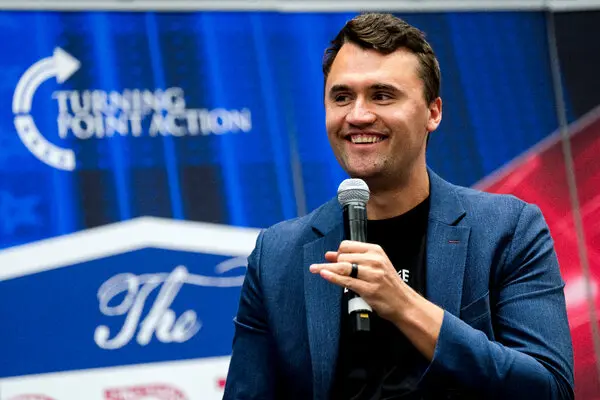
On Sept. 10, Charlie Kirk’s day started how many of his days had, and by 11 a.m. he was already at Utah Valley University, talking and debating with students. Kirk was known to be very boisterous and, in some people’s eyes, offensive at these debates. Despite this, he still tried to reach out to the students who despised and loathed him, attempting to show them care as he furthered the Christian message of loving thy neighbor, even if you disagreed with his methods.
Within an instant, however, the bridge he was trying to build was destroyed when he was shot and killed. on Utah Valley University’s campus. Conservatives mourned what had been, a man who had been a staple in their circles, taken from them in the blink of an eye, and while many used the time to grieve, the man whom Kirk had praised so many times saw an opportunity for himself.
President Trump, while first showing sympathy for Kirk, soon started to defile his memory by using Kirk’s name to advocate for censorship, as he advocated for the cancellation of Jimmy Kimmel. In his opening monologue the day following the shooting, Kimmel, a man who has become one of Trump’s fiercest critics in the past decade, discussed how he had seen “vile” responses from “both sides of the political spectrum.” During this monologue, Kimmel, as he had in years past, criticized Trump’s response to the situation as well, proclaiming that “with all of these terrible things happening, you would think our president would at least make an attempt to bring us together. But he didn’t… President Trump did not. Instead he blamed democrats for their rhetoric.”
Though Kimmel’s comments would later include the discussion of how Kirk’s shooter was “MAGA,” which was factually incorrect, the monologue didn’t consist of hatred towards Kirk, though Trump and his FCC Chairman Brendan Carr portrayed things differently. Carr proclaimed that Kimmel’s “actions had consequences,” and within half a week Kimmel had been pulled by Disney. Trump cheered as one of his fiercest critics was silenced over a misunderstanding at best, and at worst, a lie, by the most powerful man in America.
Despite the discussions about Trump’s “stupidity” by Kimmel being tiresome, Kimmel had every right to share his opinion. Kimmel’s speeches fall well under the First Amendment, something that Kirk was a huge defender of, and Kimmel’s show shouldn’t have been taken off air for his use of it. Kirk, like Kimmel, was lambasted and deemed as tiresome by many of his critics, but through it all, he used his platform to show his appreciation for the First Amendment. Trump, the man whom Kirk defended and fought to get back the reins of power was now using his name to suppress it.
While Kimmel’s show was reinstated just a week later, this initial suppression should not be taken lightly. Trump’s use of power to suppress a fundamental American right should not be forgotten and should be criticized. Love or hate Charlie Kirk and Jimmy Kimmel, they still had the right to say what they did and criticize whom they wanted. Instead of recognizing this right, Trump instead used a man whom he “respected and admired” for his own benefit. Instead of honoring his legacy regarding free speech, Trump dishonored Kirk’s memory. We as Americans should be horrified and fight for our right to free speech, instead of letting our leaders trample on it for their own gain.
Photo courtesy of New York Times.
