


If you’ve been an Asbury student for any amount of time, you’ve probably heard plenty of phrases that begin with the following: “We’re all Christians here” or “Because we’re Christians…” I hear it most often in chapel sermons, where it makes sense because the speaker is preaching a Christian message. I also hear it in conversations with professors and other students, which would make sense if everyone involved was a Christian. As we may sometimes forget, however, the latter is not necessarily true.
While Asbury is undoubtedly a Christian university, students are not required to identify themselves as Christians in order to attend. Everyone is required to respect and adhere to the university’s standards and to attend chapel, but our own religious beliefs have no technical regulations. Not every Asbury student is a Christian.
Since this is a Christian campus, it can be easy to forget that. We can fall into the habit of walking around campus and assuming that we know the general beliefs of every person we see. If we walk around with this mindset, we will often be correct. However, we risk overlooking the people who are not Christians.
I talked to a couple of non-Christian Asbury students this week about their perspectives on the issue.
“It’s frustrating,” one student shared, “because I feel like I’m not always seen… I know it’s not intentional, but I wish more people were more aware that there are some diverse beliefs here.”
“I’m not offended by it, but I don’t ever know how to tell someone that they’re working with a perception of me that’s not real,” said another. “It’s kind of an isolating feeling when people assume they know what you think without ever actually asking.”
The last sentence of this quote was particularly striking to me. How many times have I made assumptions with regard to people’s spiritual lives that were way off the mark? How many deeper conversations have I missed out on because I decided that I knew who someone was instead of letting them tell me?
In order to make sense of the people we meet, I think we often try to categorize them as quickly as possible. There is a level of openness and curiosity that we miss out on, however, when we make quick decisions about someone based on signals that we perceive and then interpret through our own lenses. This type of categorization, and subsequently the same problem, can occur when we make assumptions about someone solely based on the institutions that they belong to, like assuming that we must be talking to a Christian if we’re talking to an Asbury student.

I’ve never been fully correct in my assumptions about a person, because it’s just not possible. Even when I’ve been right in believing that someone was a Christian, I haven’t fully understood how their beliefs play out in their daily life or how their background influences their perspective. The only way for us to know how to speak about religion with a specific person is to take a step back and hear them first. If non-Christian Asbury students feel like they’re not being heard, then I think that we need to adjust our approach.
A key part of living in a genuine, honest community with others is being open to learning things about people that don’t fit into the most convenient boxes. It may be easiest to approach everyone on campus with the belief that you have a general worldview in common. It’s convenient to begin conversations with an assumption that you have the same baseline understanding. Despite the temptation to do so, however, I don’t think that we should strive for convenience when forming relationships.
Assuming that everyone is entering a conversation with the same religious beliefs can hinder our opportunities for openness, meaningful discussions and truthful understandings of one another. Let people tell and show you who they are and what they believe. If it means that we have to adjust our language and assumptions when getting to know people, then I really do think that it’s worth it. Everyone here deserves the chance to be known by the people around them.
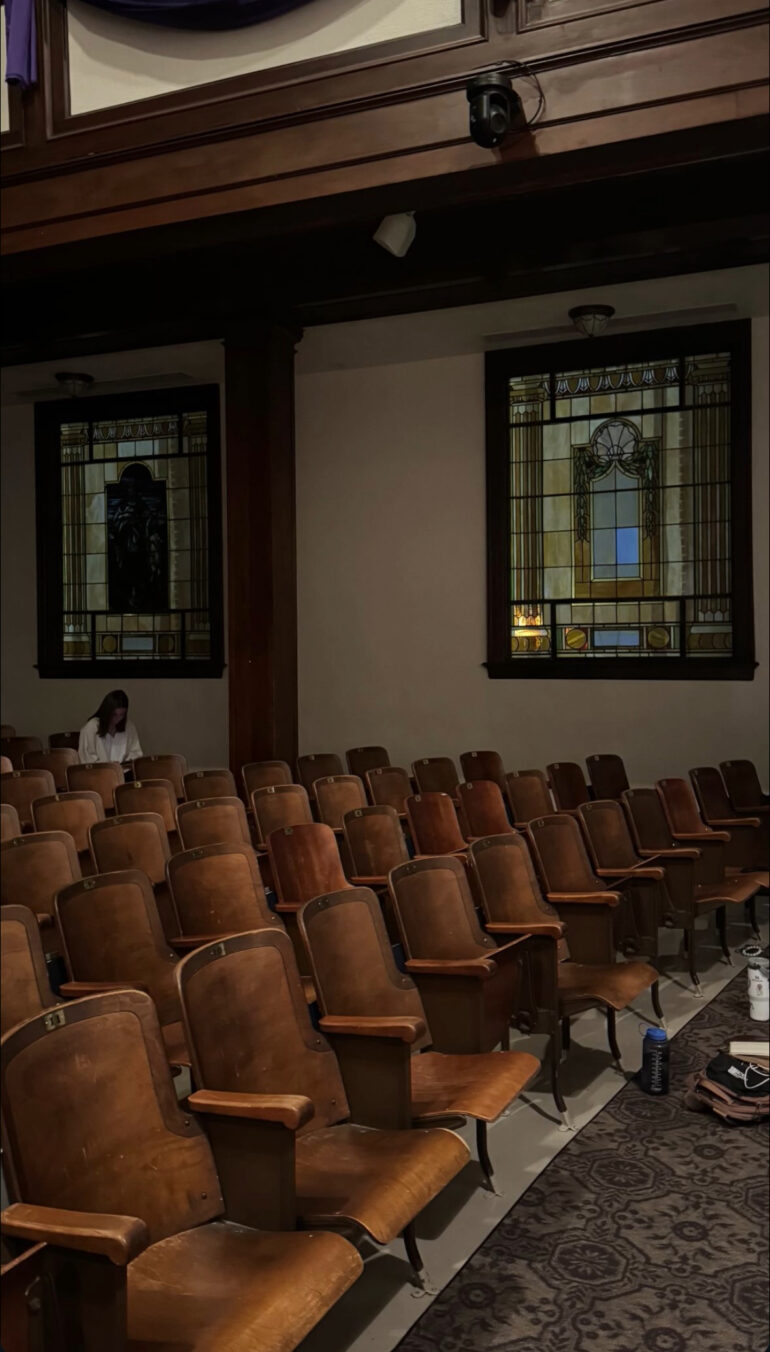
Photo by Alanna May.
