


On September 10, political activist Charlie Kirk was shot and killed in Utah. Earlier that same morning, there was a school shooting in Colorado. The day before, a Ukrainian refugee was stabbed on a train in Charlotte. In August, there was a mass shooting at a Catholic school in Minneapolis. In June, Minnesota state representative Melissa Hortman was assassinated. In July 2024, a bullet grazed President Donald Trump’s ear. And there are so many more acts of violence that I don’t have time to list all of them here.
Are you tired yet? Because I know I am.
Each of these tragedies is unique, and each may stir different emotions depending on who you are and your personal connections to them. But they are bound together by one unsettling thread: they are unfolding in a nation deeply fractured by political polarization. Sometimes it directly causes violence. Sometimes it fuels it. Always, it makes us more volatile.
According to the Pew Research Center, two decades ago, nearly half of Americans held a blend of liberal and conservative views. By 2017, only a third did. Today, that divide has only deepened, shaping the way we grieve, the way we assign blame and the way we justify violence.
Disturbingly, some people have justified these acts of violence and even celebrated them. Republicans and Democrats have pointed fingers at each other, convinced that the other side is to blame, while ignoring how polarization itself fuels the cycle of violence. Following tragic events, many people will make sweeping accusations towards certain political parties or ideologies, stating that the “other side” is to blame, as if one violent act can represent a large group of people who hold diverse viewpoints and did not consent to the perpetrated act of violence. Violence is explained away as the natural consequence of a certain ideology, rather than acknowledged as a national sickness that affects us all.
And yet, the truth is that we are all part of this problem; our silence, our unwillingness to bridge divides, our readiness to demonize others and even our casual participation in polarized rhetoric all contribute to the climate that allows violence to take root.
This shared responsibility shapes how we respond to tragedy. Some lives are grieved publicly while others are dismissed, or worse, celebrated, depending on whether we agree with the victim’s politics or circumstances. As a result, individuals on each side begin ranking tragedies, deciding whose death matters more, whose suffering deserves attention and whose grief is valid. I myself have fallen prey to this trap.
Recently, I had a conversation with a friend about some of the recent events in our country, and I realized something. His heart was grieving deeply for a particular tragedy, while mine was drawn to another. Instead of recognizing the weight of each other’s sorrow, we were dismissive, ranking our grief as if one wound was more deserving of tears than another. That’s when I realized something. Maybe we as Christians are called to a different form of grief: one that mourns with those who mourn.
It is not possible for one individual to carry the full weight of every national and international tragedy. Trying to do so would lead to overwhelming despair. In an article entitled “Dedicate yourself to one—yes, one—social justice cause,” Tegan Merrick, Copy Editor for The Asbury Collegian, wrote that if each of us devotes ourselves to advocating for just one cause that we are passionate about, “We can relax when we see that the pressure of injustice is held by many hands.”
What if grief, too, could be borne by many hands?

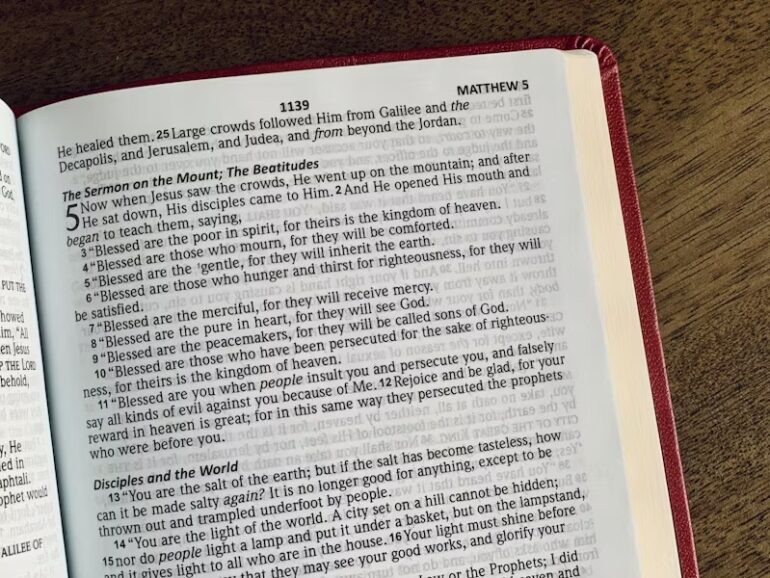
The Beatitudes remind us of this calling when Jesus says, “Blessed are those who mourn, for they shall be comforted” (Matt. 5:4) and “Blessed are the peacemakers, for they shall be called children of God” (Matt. 5:9). Romans 12:15 also directly calls us to mourn with those who mourn. To be a peacemaker in today’s climate is to actively work against division, to bridge gaps, to reject the impulse to rank grief or assign blame and to respond to violence with empathy rather than partisanship. When we have the ability to mourn with those who mourn, we can lessen the effects of the wounds that have been created by such a polarized political climate.
Being a peacemaker does not mean ignoring injustice or avoiding hard conversations. It means refusing to let polarization dictate our empathy, refusing to dehumanize others because of ideology and refusing to let grief be compartmentalized by political identity. It is about standing alongside those who mourn, advocating for justice and fostering understanding across divides.
If we can bear witness to suffering, offer compassion without judgment and work towards reconciliation, we reclaim a sense of shared humanity, reminding ourselves, and the nation, that empathy, justice and love are not limited to one side.
So today I mourn. I mourn the loss of Charlie Kirk. I mourn the loss of the children in Gaza. I mourn the loss of the victims of mass shootings. I mourn for all the lives affected by violence, hatred and division. I mourn. And when I can no longer do that, I will join hands with those who are mourning. Grief is not meant to be carried alone, and together our shared compassion can heal, console and remind us of the humanity that binds us beyond politics, ideology or circumstance. And as I do so, may I also cling to the joy and the hope that can only come from the person of Jesus Christ. Because we can only move forward if we make the decision to hold our hope and our despair together in one hand.
Photo courtesy of Unsplash.
