

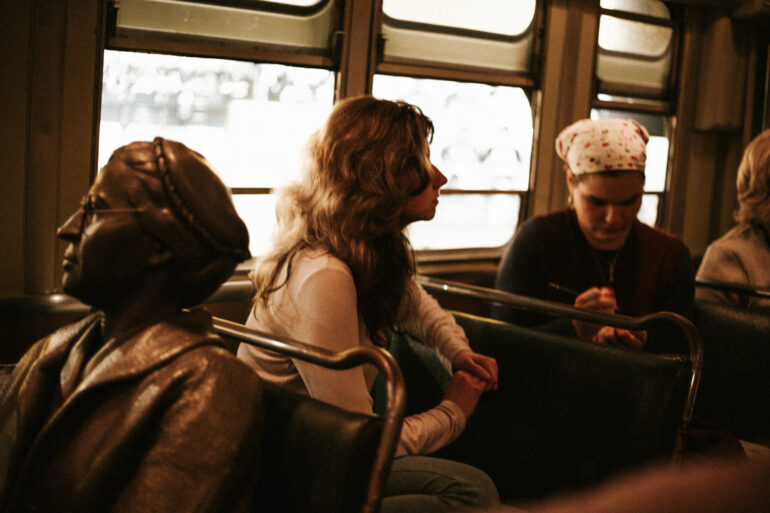

During Spring Break, the students of Dr. Zonio’s Social Movements and the U.S. Civil Rights Movement class ventured to landmarks, monuments and museums that discussed pivotal parts of the Civil Rights Movement. Students were instantly swept into the impactful history that surrounds this movement, experiencing crucial aspects outside of the classroom.
Sociology major Belle Forrest attended this trip with eight other students, chaperoned by Dr. Zonio and Dr. Okesson. “The highlight of the trip was getting a tour of Selma from a man who was one of the original foot soldiers who marched on Bloody Sunday and Turnaround Tuesday, which are two very significant, kind of turning points in the civil rights movement. His name was Mr. Kirk, and he’s lived in Selma his whole life. And the way that he talked about the movement, progress and how we keep progress was impactful.”
The structure of the trip varied based on the content of the day; some involved community service and others were spent learning in museums or driving to nearby cities that were also important to this movement. Students met every night to debrief and talk about what they had experienced or learned that day, a necessary meeting due to the heavy content that this trip entailed.
To prepare for the trip, students in Dr. Zonio’s class were assigned readings, including “Why We Can’t Wait” by Martin Luther King Jr., “The Spirit Of Justice” by Jamar Tisby and other books rich with different perspectives and crucial narratives that tell the multilayered story of the Civil Rights Movement. Forrest stated, “I felt very well prepared, because I was already knowledgeable about the historical events of the civil rights movement and also the nonviolent strategies used by civil rights leaders, just from being a sociology major… but it was completely different to see it in real life, like right in front of your eyes, because you’re seeing things that you’ve seen pictures of or video from or read accounts from people that were there. But it’s completely different when you’re standing and looking at those sites and seeing that history, right in front of you, or talking to somebody who was there, who was a firsthand account.”
During this trip, students visited places like Memphis, Selma, Montgomery, Birmingham and Atlanta with the aim of exploring some of the locations that were significant, engaging in the ongoing conversation and call to action for racial justice. Dr. Zonio facilitated conversations about how the Christian faith has and should be a crucial place of support, resisting racial injustice and fighting for freedom and radical love.
Conversations and experiences like these are still critically important, especially in a time of political unrest. It is important to realize that the Civil Rights Movement has never gone away; people are fighting for equal rights to this day. Forrest commented, “The general narrative is that after the Voting Rights Act was passed, everything was fine because everyone could vote, but that’s not true. It has become a facade of equality… it really gives you something very tangible and something real to connect to academic life. I think there’s just so much to learn. I gained so much empathy through this trip, learning how to be a better advocate.”
Photo courtesy of Kaitlyn McCracken.
